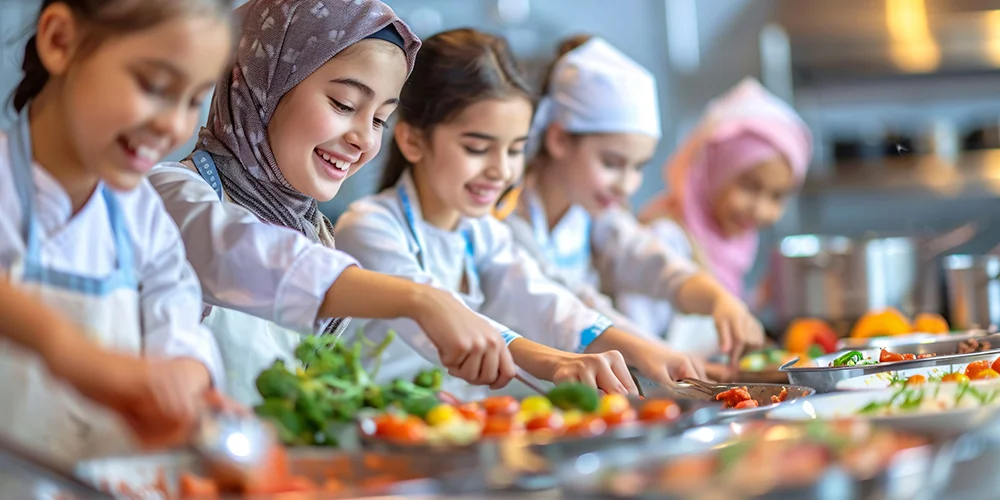
Creating Healthier and Safer Meals for Students Food plays an important role in the daily experience of students.
For schools, universities, and educational institutions, providing meals is not simply about making food available. Catering teams need to consider nutrition, food safety, portion sizes, dietary requirements, taste, variety, and the different needs of students throughout the academic day.
A well-managed education catering program can create a safer and more enjoyable dining environment while supporting the wellbeing of students and staff.

Why Education Catering Requires a Specialized Approach
Educational environments are different from corporate offices or hospitality venues.
Students have different nutritional requirements depending on their age and activity levels, while schools and universities need to manage food services within specific schedules and operational constraints.
Catering providers must therefore understand the environment in which meals are being served.
A successful education catering program should balance:
- Nutrition
- Food safety
- Taste
- Variety
- Affordability
- Dietary requirements
- Efficient service
- Student preferences
When these elements are managed together, food service becomes an important part of the overall educational environment.
1. Making Nutrition a Priority
Students need nutritious meals to support their daily activities and overall wellbeing.
Menus should provide a sensible balance of proteins, carbohydrates, vegetables, fruits, and other nutritious ingredients.
Rather than relying heavily on highly processed or excessively sugary foods, educational catering programs can provide students with a wider selection of balanced meals and snacks.
A varied menu can make healthy choices more appealing and encourage students to develop better eating habits.
2. Creating Menus Students Actually Enjoy
Nutrition is important, but students also need to enjoy the food they are served.
A menu that is healthy but consistently unpopular may not achieve its intended purpose.
Education catering therefore requires an understanding of student preferences.
Catering teams can use menu rotation and feedback to identify popular dishes while introducing healthier alternatives.
This can help create menus that balance:
Health + Taste + Variety
3. Catering for Different Dietary Requirements
Students may have different dietary preferences, allergies, intolerances, or cultural requirements.
Educational catering providers need appropriate procedures for managing these needs.
Depending on the institution, menus may include:
- Vegetarian options
- Vegan meals
- Allergen-aware choices
- Special dietary meals
- Halal food
- Balanced healthy options
Clear labeling and proper food handling procedures are especially important when catering for students with food allergies or specific dietary restrictions.
4. Food Safety in Educational Environments
Food safety is one of the most important responsibilities of any school or university catering operation.
Children and young people can be particularly vulnerable to the consequences of foodborne illness, making proper food handling essential.
Professional catering teams need to maintain strong procedures covering:
- Ingredient storage
- Food preparation
- Cooking temperatures
- Personal hygiene
- Kitchen sanitation
- Cross-contamination prevention
- Food transportation
- Service areas
Regular monitoring and staff training help maintain consistent food safety standards.
5. Managing Busy Meal Periods
School and university meal periods can be extremely busy.
Large numbers of students may need to be served within a relatively short period.
Without proper planning, long queues and service delays can negatively affect the dining experience.
An effective catering operation can improve service efficiency through:
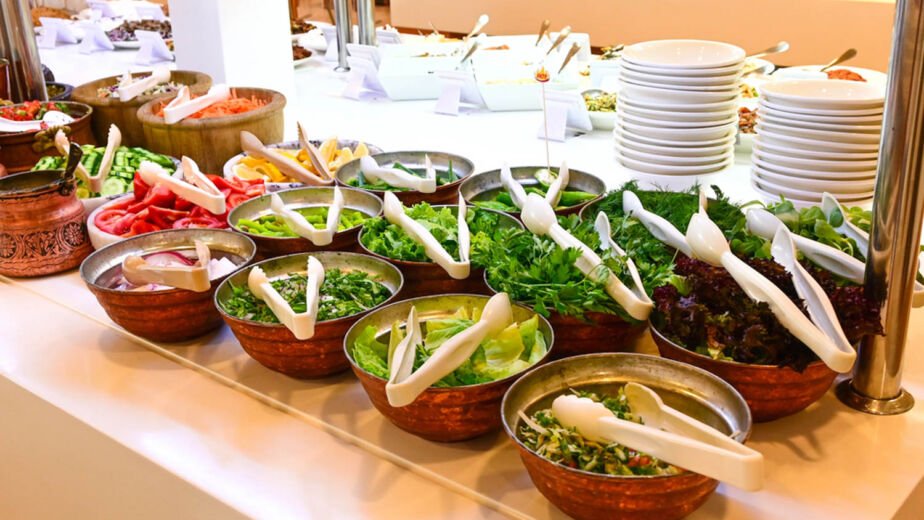
- Organized serving stations
- Efficient kitchen workflows
- Appropriate staffing levels
- Clear meal layouts
- Pre-planned production quantities
- Well-designed dining areas
The objective is to serve students efficiently without compromising food quality or safety.
6. Reducing Food Waste
Educational institutions can generate significant food waste if meal production is not carefully planned.
Student attendance can change from day to day, while preferences may vary between different age groups.
Catering teams can use consumption data and feedback to improve production planning.
For example, if certain meals consistently generate more leftovers, catering managers can investigate the reasons and adjust future menus or quantities.
Reducing food waste can help institutions manage costs while supporting more responsible food service practices.
7. Encouraging Healthier Choices
Education catering can also contribute to developing positive food habits.
Providing students with access to fruits, vegetables, balanced meals, water, and nutritious snacks can make healthier choices easier.
Menu presentation can also influence what students choose.
Simple factors such as attractive presentation, clear labeling, and convenient access to healthy options can encourage students to explore better food choices.
8. Adapting to Different Educational Environments
Not every educational institution has the same requirements.
A primary school may require a different approach from a university campus.
Similarly, boarding schools, vocational institutions, and large universities may have different meal schedules and service models.
Catering programs should therefore be flexible enough to adapt to:
- Student age groups
- Campus size
- Meal schedules
- Number of students
- Available facilities
- Dietary requirements
- Budget considerations
Customization is an important part of building a successful education catering program.
9. Listening to Student Feedback
Students are the people using the catering service every day.
Their feedback can provide useful information about the dining experience.
Institutions can collect feedback about:
- Favorite meals
- Menu variety
- Portion sizes
- Service speed
- Food quality
- Healthy options
- Areas for improvement
Catering teams can use this information to make practical adjustments.
This creates a more responsive food service that evolves according to the needs of the institution.
10. Supporting Staff and Faculty
Education catering is not only about students.
Teachers, administrators, support staff, and faculty members may also depend on food services during the working day.
A comprehensive catering program can provide appropriate options for both students and staff while maintaining separate requirements where necessary.
This creates a more complete food service environment across the institution.
11. Consistency Every Day
Educational institutions depend on reliable services.
Meals need to be available according to schedule, food quality needs to remain consistent, and safety procedures must be followed every day.
This requires effective coordination between kitchen teams, catering managers, suppliers, and institutional staff.
Consistency is particularly important in education because catering is often a daily service rather than an occasional activity.
12. The Value of Professional Catering Management
Managing an education catering operation internally can require significant resources.
Professional catering providers can help educational institutions manage food procurement, menu planning, kitchen operations, staffing, food safety, service, and quality control.
This allows the institution to focus on its primary educational responsibilities while relying on experienced professionals to manage the food service operation.
Building Better Education Catering Solutions
Successful education catering requires a careful balance between nutritional quality, student preferences, safety, efficiency, and operational requirements.
The best programs are designed around the specific needs of the institution rather than relying on a one-size-fits-all approach.
At SSS Catering & Hospitality, our catering solutions are developed to meet the requirements of different sectors and operating environments.
For educational institutions, this means creating food service programs that focus on quality, safety, variety, and reliable daily operations.
From menu planning and food preparation to service and quality management, every stage contributes to creating a better dining experience.
A Better Meal Supports a Better Environment
Food is an important part of everyday life at schools, universities, and other educational institutions.
When students and staff have access to safe, nutritious, varied, and well-prepared meals, the dining experience becomes a positive part of the wider educational environment.
Professional education catering can help institutions provide this experience while maintaining the operational standards required for large-scale food service.
Looking for a professional education catering partner in the UAE?
SSS Catering & Hospitality can develop a customized food service solution designed around your institution, student population, staff requirements, facilities, and daily schedule.
👉 Book Now: https://sssch.ae/contact-us/
👉 Message Us: https://wa.me/971565370073